Blog home / The Le Puy Camino: A Tale of Homecoming, Contrast and Joy
The Le Puy Camino: A Tale of Homecoming, Contrast and Joy
If you’ve ever wondered what it’s like to walk France’s Le Puy Camino, this beautifully detailed story from Hilda, one of our UTracks travellers, offers a glimpse into the reality of this historic route. From early spring rains to golden valleys and ancient villages, Hilda’s third journey along the Le Puy Way reveals not just the challenges of long-distance walking, but the quiet joy, resilience and wonder that come with every step.
Learn more about our
Le Puy Camino tours here. Many thanks to Hilda Olivier for her hugely inspiring tale.
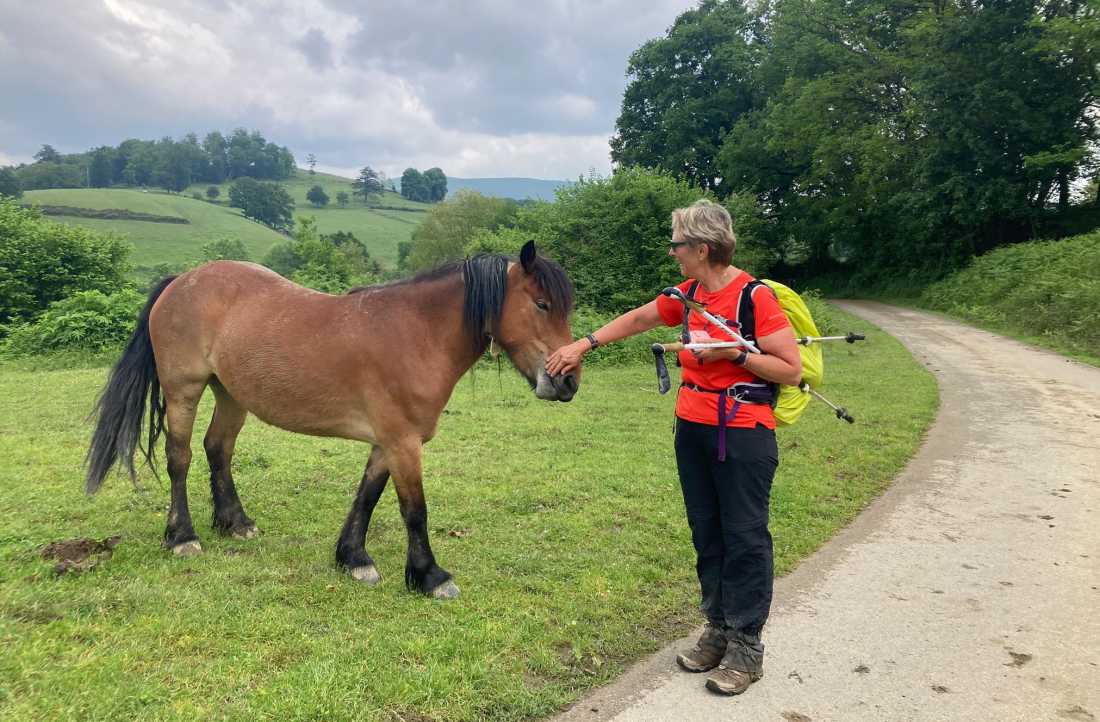
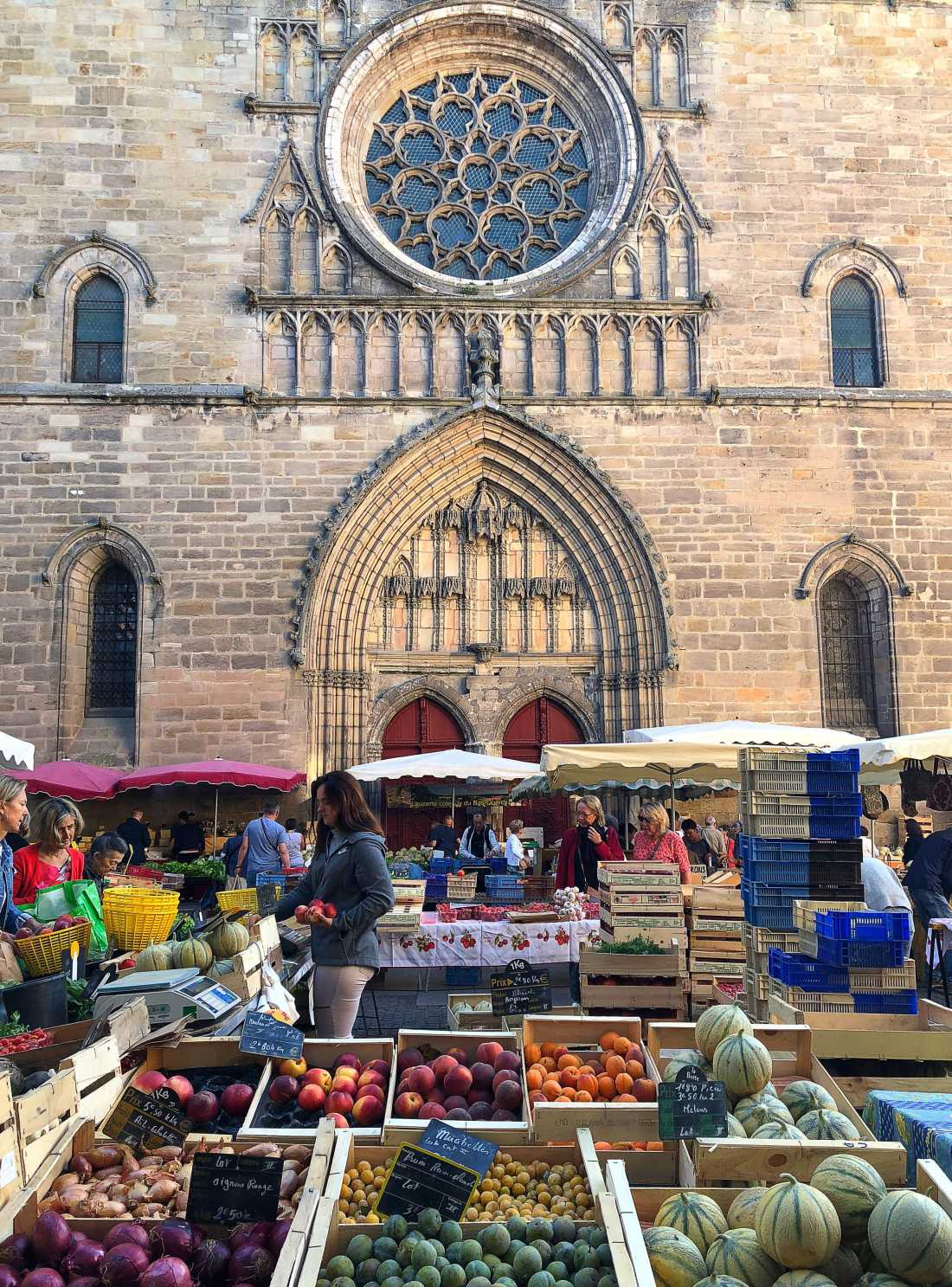
After having spent time in most of France’s regions since my first adventure in 2006, I wanted more from my visit in 2017. I wanted more than cosy cafés, pretty shops, cobblestoned alleyways, museums and cathedrals. I wanted adventure and physical challenge, surrounded by mountains, valleys, meadows, hills and plains. I wanted to commune with cattle and sheep, feed apples to donkeys and horses along narrow, well-trodden footpaths, cackle with village chickens and savour wild fruit for daily sustenance along the way. I imagined stopping by at early morning markets to fill my backpack with wholesome heirloom tomatoes, chewy saucisson and fresh bread for the road.
The Le Puy Camino is all this and so much more. Returning for a third time to walk this Way, was an easy decision after considering other options as a matter of change. Not only does France always call my name, but having walked the Stevenson, Ardeche and Tour du Mont Blanc, Le Puy remains The One. Unlike so many pilgrims/hikers/walkers, I haven’t experienced a life changing epiphany along the way. I have, however, undoubtedly gained a deep, lasting understanding and gratitude for the gifts of life, health, freedom and opportunity.
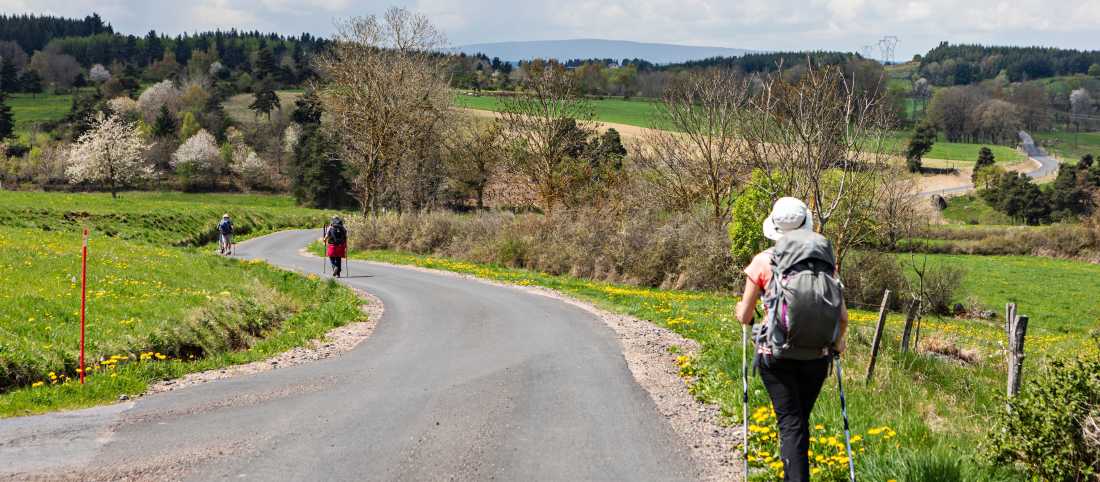
I elected this time to follow the Célé variant which diverts after Figeac for four days before rejoining the classic Le Puy Way in Cahors. I had often heard others speak of the exceptional natural beauty of this variant though it is physically more challenging. Having already had all my hiking gear from previous adventures, the only purchases were new trail shoes, basic toiletries and a fresh first aid kit. Being familiar with the route, I had the advantage of knowing what mental and physical demands awaited and adjusted my training program accordingly. I added uphill interval training to my daily runs and undertook longer weekend walks over undulating terrain. We all approach and experience challenges differently but I recommend quality training, adding to a more pleasant adventure and opportunity to take in daily experiences rather than simply surviving until the body adjusts and becomes more comfortable. When struggling physically, uninvited mental and emotional overwhelm can take over and rob the day’s experience of its privilege, beauty and wonder.
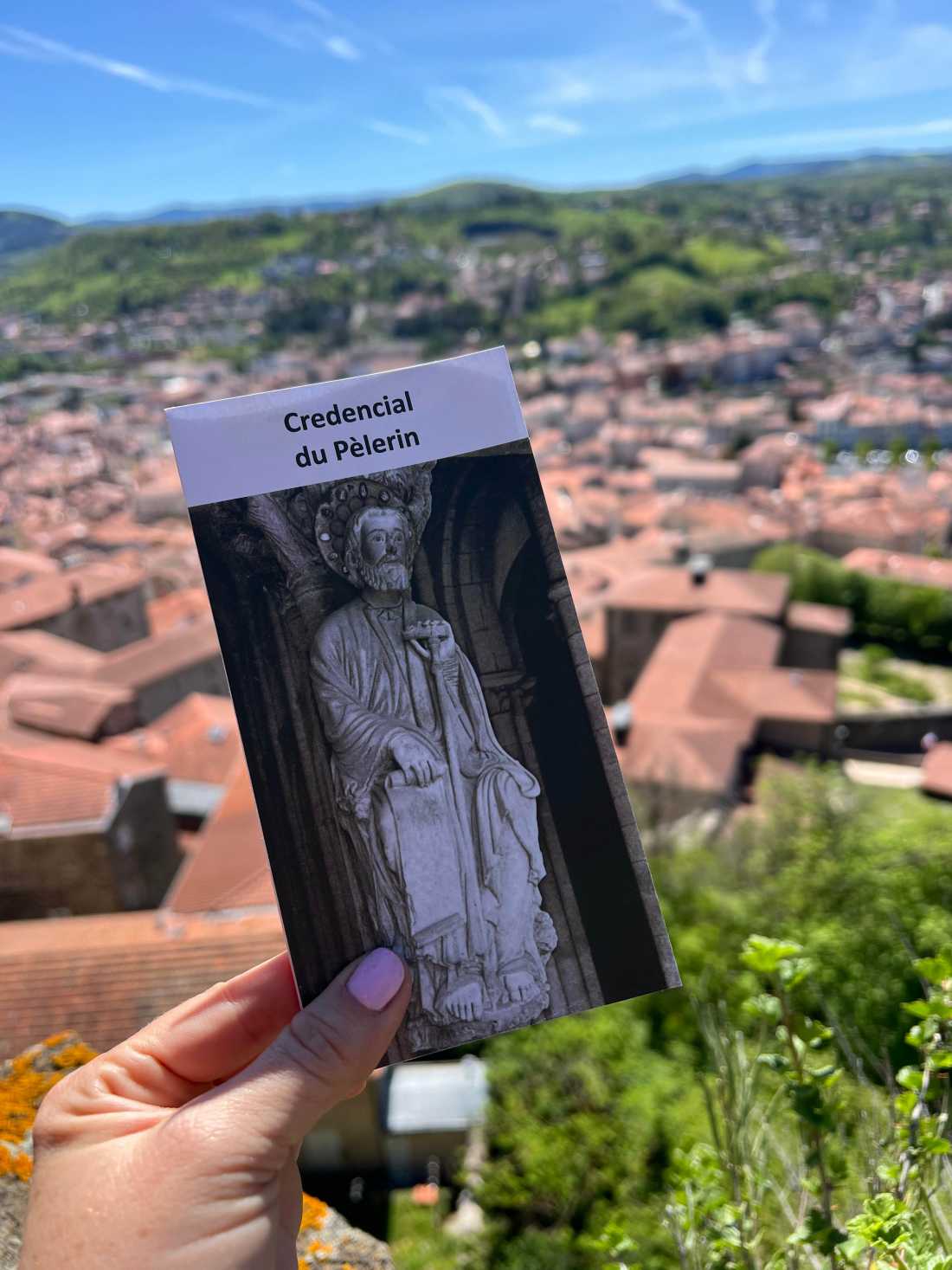
Highlights for me each time are arriving in Le Puy-en-Velay and the first day’s walk, starting with the emotional Pilgrim’s service in the majestic Cathédrale Notre-Dame-du-Puy. Thereafter, the last day, when taking the final bitter-sweet steps through Porte Saint-Jacques, in St Jean-Pied-de-Port when my brain, body and heart scream for more walking, lingers for many weeks afterward. I usually walk in September/October when the entire countryside is flourishing, bursting with life. Masses of sunflowers, crops of many varieties, vines and fruit trees, heavy with the season’s ripening harvest, calves, lambs, baby goats and piglets abounding in the meadows and chicks running rampant in village coups. The infectious joy of summer is quite tangible.
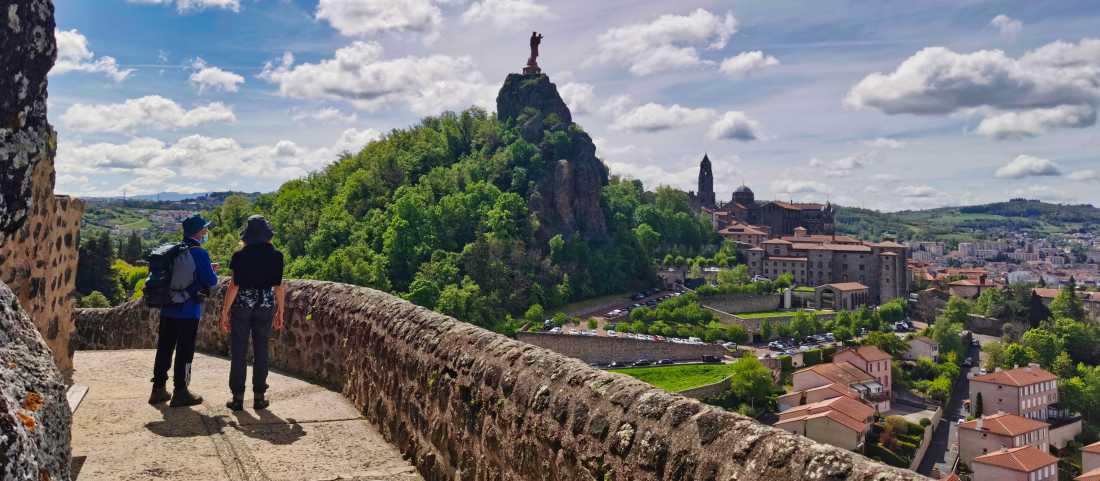
This time I walked in early Spring – April/May. I was unprepared for the contrast from the first day. Freezing winds from the East and a lot of unseasonable rain, apparently with a lot more rain, mud and mire to come along the way. Being so early in season, there was not much evidence of nature’s renewal, expected in early spring. Livestock was still lingering in barns and sheds since late autumn and many homes were shuttered against the icy winds. There was a silence about the days, with only the whining wind around my ears and the crunch of gravel and stone underfoot. But, as always, I was grateful to be there, walking and experiencing this contrast to previous occasions.
And then, on day 15 I arrived in Béduer, where the trail for the variant diverts down into the Célé Valley, swathed in the golden landscapes of the Causses du Quercy Regional Park. Slip-sliding my way down a sodden, rocky path, I took time to stop and take in the vastness of the beauty which surrounded me. Just when I thought that my daily experiences couldn’t get more extraordinary, they did. Enchanting historic villages where time is suspended, the inhabitants and their welcoming warmth and food, soaring troglodyte and limestone cliffs extending in all directions and the mighty Célé river, twisting and turning far below, all add flesh to the majesty of this glorious valley. Most of the walking tracks run along a balcony, awarding vast, expansive views, which meant that steep ascents awaited early in the day. The effort abundantly rewarded by sweeping vistas across undulating, green and lush landscapes. These four cherished days stand out as the pièce de résistance of this year’s Le Puy Camino.
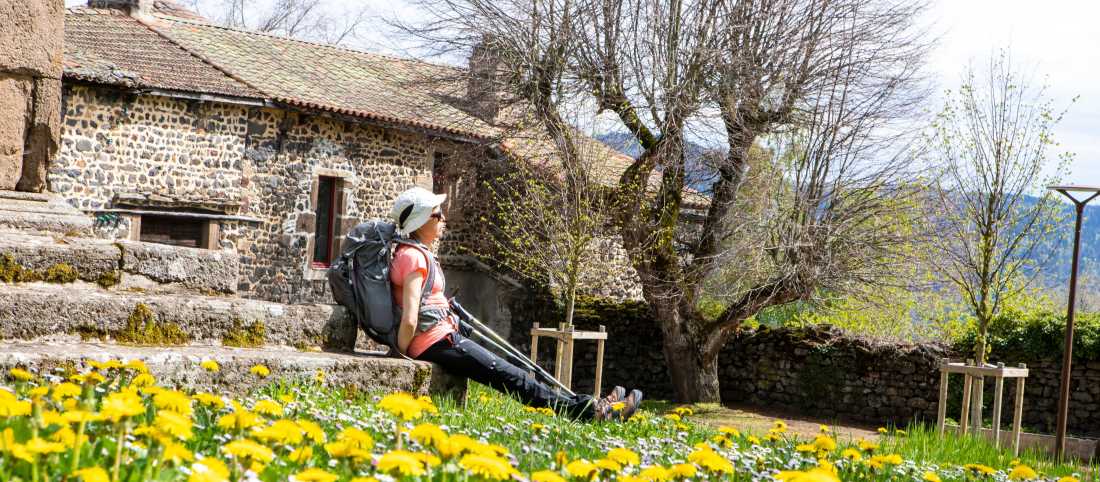
Along the entire Le Puy Camino, most days presented me with an ‘I want to live here’ or ‘I can get used to this’ impression. All the villages of the Célé Valley which I passed through and stayed in overnight, added to my sentiments. However, the ninth century Saint-Cirq-Lapopie, a town straight from the Middle Ages and one of France’s famous Les plus beaux villages, clinging to cliffs 100m above the confluence of the Lot- and Célé rivers, remains etched in my memory. It is not about the myriad brasseries, restaurants and hole-in-the-wall treasure-filled shops, though the quaint buildings and used-to-be-houses which have been remodeled remain animated and largely preserved, at least on the outside, maintaining the rich tapestry of medieval architecture throughout the town. For me it is about previous lifetimes worth of history that this enchanting town has seen, which are reflected in the many remaining ruins surrounding it. When all the modern lights go out and silence closes in on this little cliffside commune, I imagine the stories of centuries gone by, when wars were waged and inhabitants fought with all their might to preserve their lives and livelihoods. Finding a quiet corner, away from the cacophony of visiting crowds, permitted me to re-imagine the daily goings-on of centuries ago. Sunday mass in the 15th century Eglise Saint-Cirq-et-Sainte-Juliette, the 13th & 14th century half-timber houses, some of which served as shops where various artisans created and traded their wares, Place du Sombral where markets were held in the 13th century and continue still. The ruins of De Château des Cardaillac modernised in the 15th century before being gradually abandoned by the lords of that time who became disheartened by its repeated destruction ordered by Louis XI, Charles VIII and Henry of Navarre.
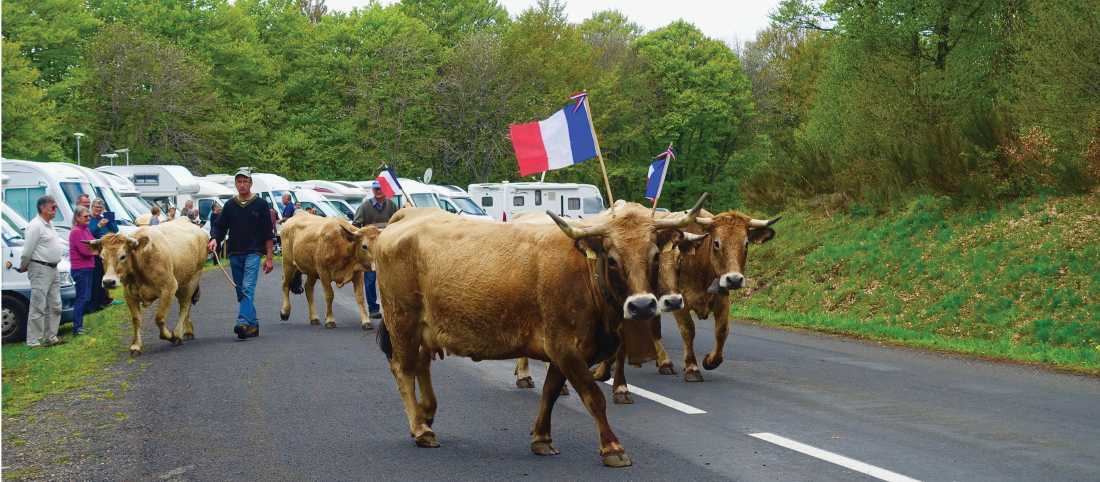
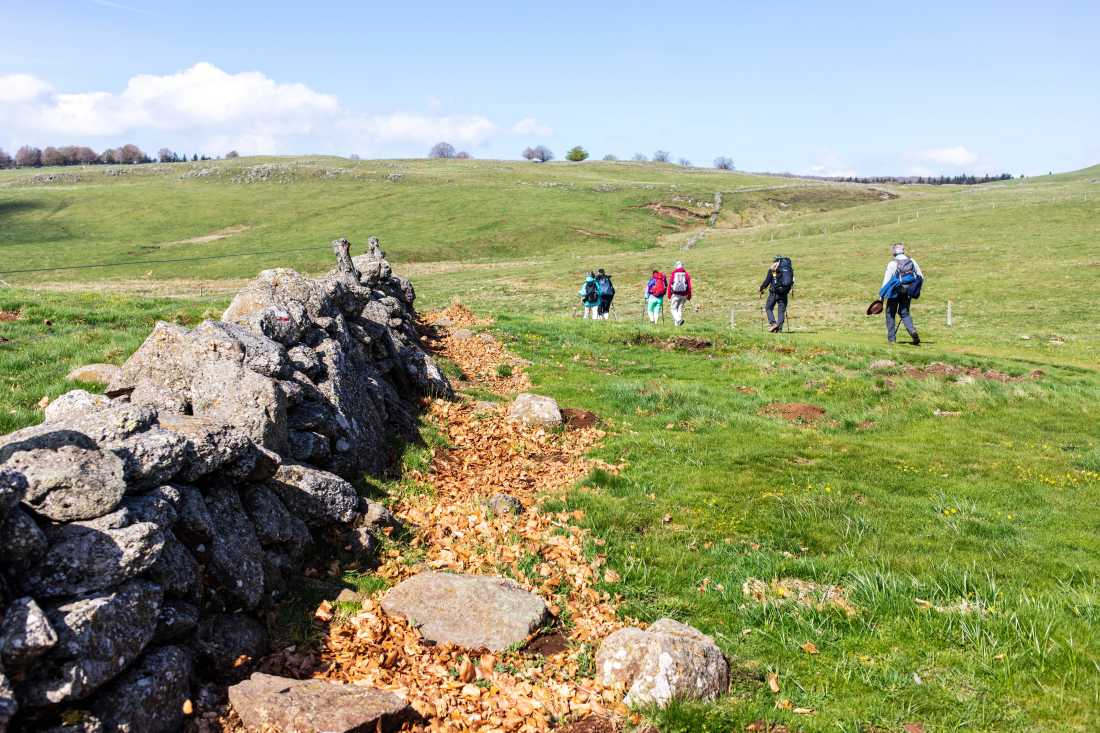
Remnants of winter rendered the views rather bleak and grey in some areas as each day progressed, particularly across the Aubrac plains. I was surrounded by dead trees, dead grass, and just a vast expanse of pale brown. These plains, home to valuable wetlands which not only provide water and feed for the local wildlife and cattle in summer, eventually transform into verdant swathes of lush green grasses and floral displays. I missed the cattle, bellowing and chewing the cud as they’d watch walkers go by. Walking among them, as I have done previously, is a novel and happy experience. It was too early in the season for the trans-humance which brings them up to the high-altitude plains. Dotting the brown vastness, the blossoming Narcissus of the Poets, Snowdrops, Jean d’Arc Crocuses, yellow daffodils and bright-red poppies couldn’t be suppressed, teasing out the approaching spring season. On day eight, I left Saint-Chely-d’Aubrac to walk to Saint-Come-d’Olt. The views over Saint-Chely as I left and started an immediate climb were divine. It is truly a pretty village. Crossing the road to follow the footpath climbing away from the Aubrac region and into the Auvergne, left me questioning what the new day and region would bring. Once I reached the top of the steep trail, the spectacular beauty of the Lot Valley revealed itself unrestrainedly. Gentle rolling hills, valleys of emerald green and endless fields of bright yellow dandelion swaying in the breeze, enhanced by the bright sun in a cloudless sky and cattle, happily grazing; all so spectacular after the bleak silence of the previous days. Until this moment, I hadn’t quite realised how the remnants of winter bleakness of the first seven days had affected my mood, even amid my immense joy and gratitude for being in France and the privilege of leaving my footprints along The Way. From here forward, each day was drenched in nature, alive with the unfolding spring season. From Bas Armagnac with its plentiful fruit orchards and endless vineyards to the Béarn region, nestled in the foothills of the Pyrénées. Lomagne with its vast seas of swaying virgin wheat fields to the colourful Basque region with its characteristic architecture, culture, joy of music and hearty food, where the snow-capped Pyrénées, clearly visible from every direction, seemed a mere stone’s throw away. From one town to the next, through nestling valleys and over hills, physically challenging and easy-as-Sunday-morning days flowed, one into the next. Time was passing by too rapidly.
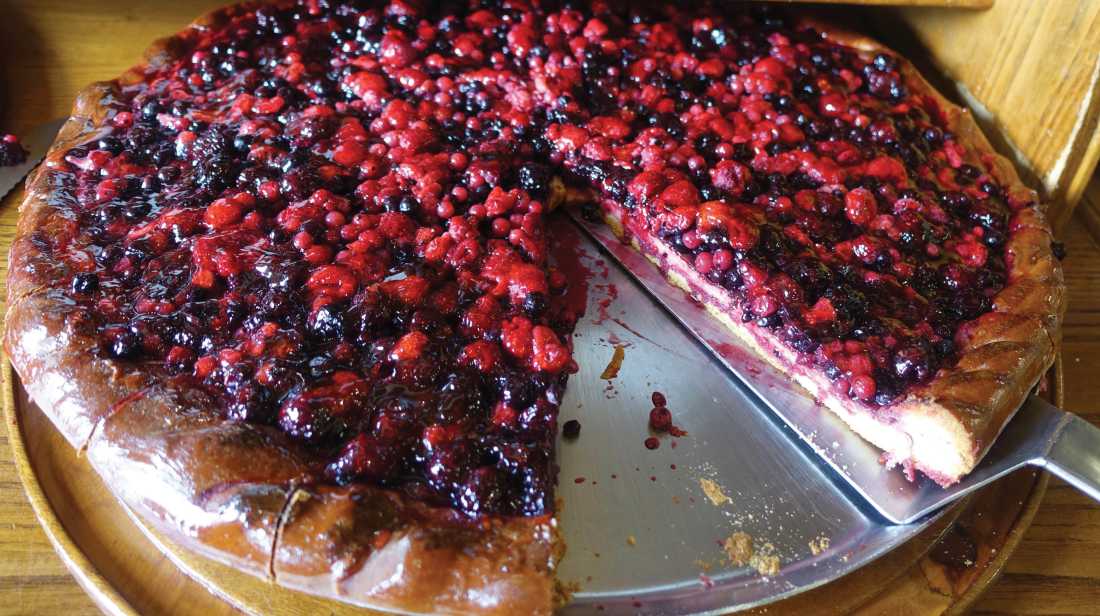
One of the treasures of walking the Le Puy is the variety of food as one crosses the various regions along the way. From one region to the next, one’s palate is entertained by authentic, honest, heartwarming food made from locally sourced ingredients and passion. Among my personal favourites are comforting Cassoulet (originally from the Languedoc region) made with confit duck and Toulouse sausage in a hearty white-bean and white wine sauce and also Aligot, stretchy, silky mashed potato made with Cantal and Laguiole cheese, typically from the Aubrac and Auvergne regions, served with Toulouse sausage or juicy roast meat. In the [French] Basque country, Axoa d’Espelette (Basque Veal Stew) is served quite regularly though it doesn’t appeal to me but the Gâteau Basque always makes up for it. It is a typical Basque dessert cake consisting of either a black cherry jam or pastry cream filling between a biscuit-style piecrust. Served warm with cream, I happily paired it with the dinner wine and passed on the Veal Stew. Wherever one stays, white and red wine is served with dinner, the vintage and history of which isn’t usually questioned because it comes free. Adding to the wine, I also made my acquaintance with Floc de Gascogne, in the pretty fortified village of Larressingle, another of France’s Les plus beaux villages, in the Gers. Floc dates back to the 16th century and is a sweet, fortified aperitif wine from the Côtes de Gascogne and Armagnac regions.
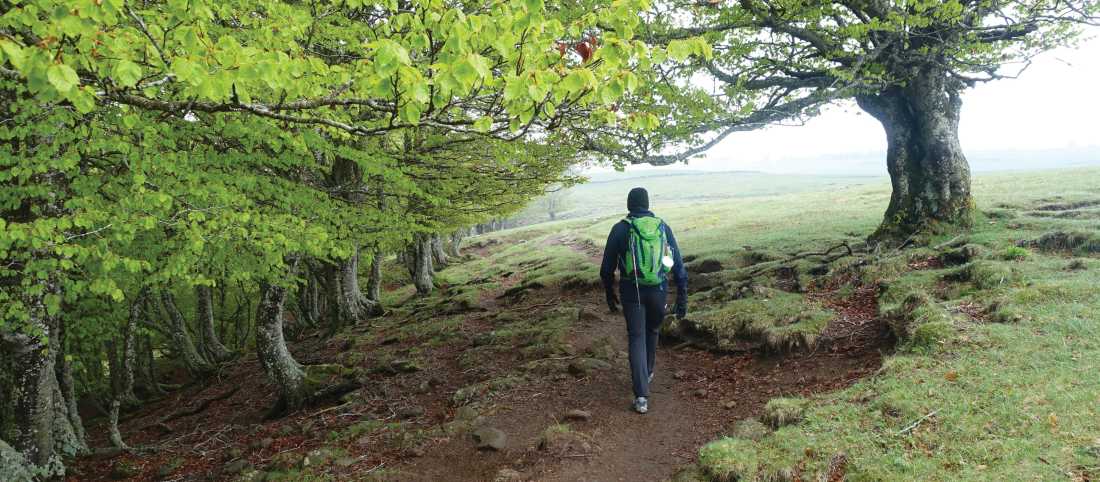
Being familiar with and physically prepared for this journey, I didn’t find it too challenging. Not needing to carry a heavy pack was a great advantage. There are long, steep ascents and equally long, steep descents throughout. However, these are broken up with comfortable flat sections in-between. This Camino, like many adventure walks, can test one’s tenacity but also rewards abundantly. This year however was exceptionally challenging due to the unseasonably heavy rain resulting in almost daily stretches of deep, relentless mud conditions which made it very difficult to anchor oneself while trying to negotiate each step safely. The undergrowth on either side of the trails made detouring equally difficult but did offer occasional semi-reprieve. In many instances the overnight hosts warned us to walk the next day along the road instead of the trail. I connected with a few others along the way and slightly ahead of me, who’d sent WhatsApp images of the conditions. The bush telegraph was certainly busy and helpful in keeping us all as safe as possible. On a couple of occasions many of us followed available by-roads rather than the trails. Fortunately, each day’s muddy conditions didn’t last the entire way and my joy of walking instantly returned along the dry sections where I could enjoy the surrounding magic with ease. These conditions were the exception even though many locals told us that it was a repeat of last year around the same time. Regardless of the season and its perils, being in the French countryside, taking in all the stages of either the awakening or winding down of the seasons, is always my greatest joy.
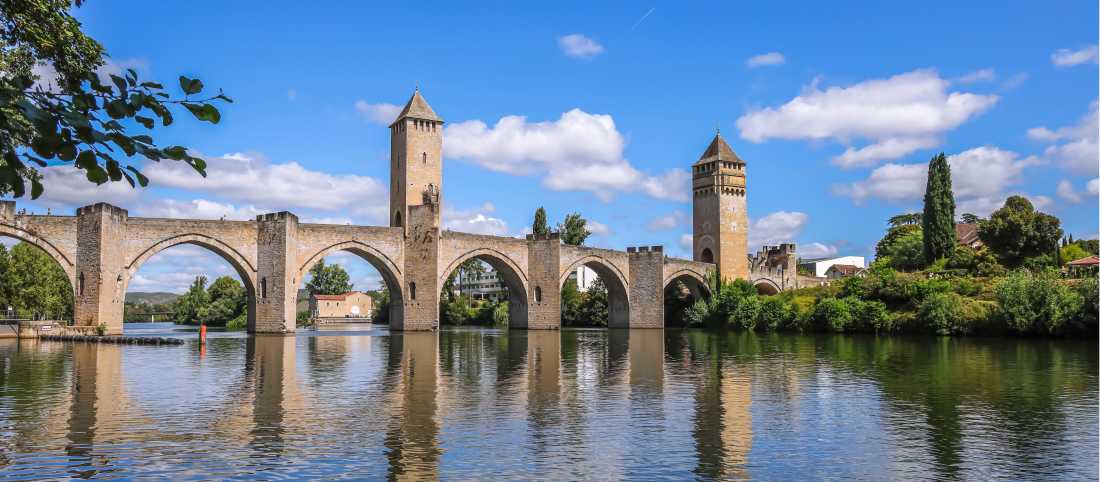
I would encourage anyone who is finding it hard to decide on which adventure in the varied U-Tracks brochure to take, to seriously consider walking the Le Puy Camino. If you have the time and haven’t walked previously, the Le Puy offers experiences of every kind for every level of fitness and interest. U-Tracks do offer stages along the Camino but it is so hard to recommend one from the other. They are all unique and certainly worth the effort. Chances are great for it to be a most beautiful, life-enhancing experience and introduction to many other such experiences. For those who decide to walk the classic le Puy Camino or even just the stage from Conques to Cahors or Cahors to Lectoure, and not the Célé variant, I would recommend an extra day in Cahors from where St Cirq Lapopie is a short 34-minute bus ride away. Do take the time to experience this very special village and its treasures.
From a practical perspective, I never walk without poles. They provide all the support and safety one needs on all types of terrain, particularly the long, steep, stony ascents, descents and rocky trails. Injinji or Creepers toe-socks and Blister Wool are the best inventions and I highly recommend them. Blister Wool for blister prevention and any pressure point discomfort inside one’s shoes, an absolute necessity. Wherever I felt any twinge of pain or discomfort on top of or under my feet and toes, I’d stuff Blister Wool into my sock at that spot and managed to walk absolutely pain- and blister-free. My toe-socks stopped my toes from being squashed together, preventing them from chafing against each other. This is an all-too-common issue particularly with the small toes. In addition to their moisture-wicking properties, these socks allow one’s toes to spread inside the shoes which adds to all-over foot-health and comfort during long, warm adventure-filled days.
My next short walk may be the
Crusader Trail - Cathar Castles Walk, because I have a deep interest in the Cathar history. The
Dordogne and
Provence are equally attractive. I’ve visited these areas but walking provides, adds a unique and intimate perspective. Other trails that I have walked through U-Tracks besides the previous two Le Puy Caminos, include the famous
Tour du Mont Blanc, the
Stevenson Trail and
Secrets of the Ardèche; all of which are highly recommended. I have set my sights on walking the Voie de Vézelay next year. It is also part of the Way of Saint James network and at 902km long, follows trails through different regions of France to those of the Le Puy.
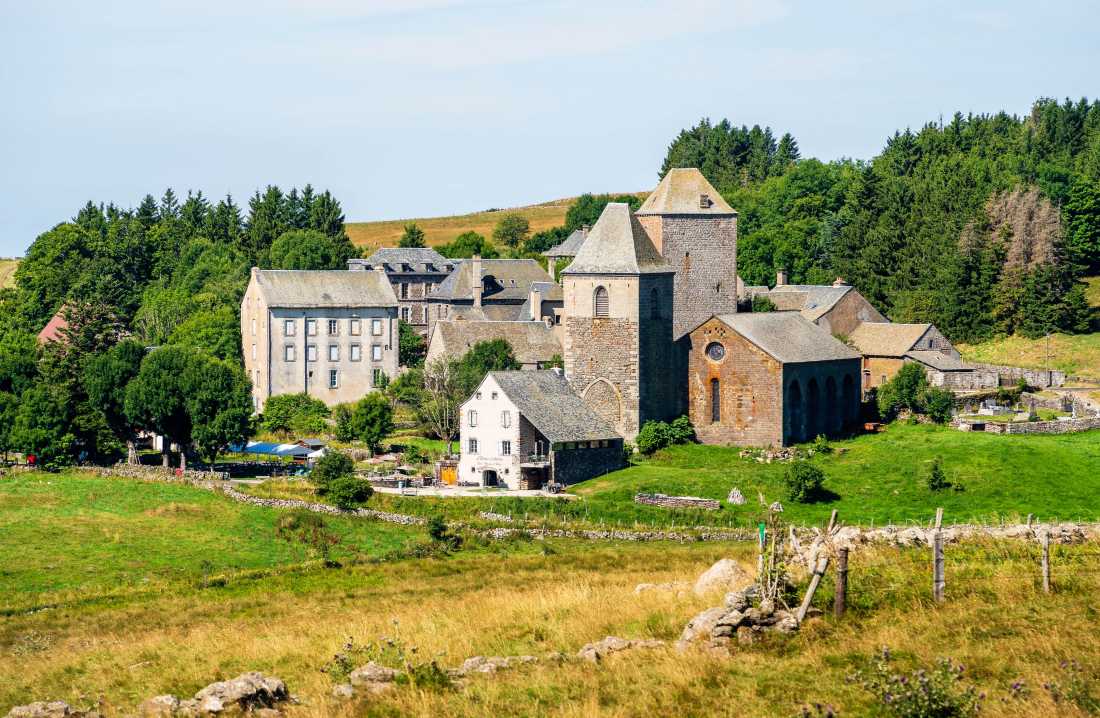
All practicalities and formalities considered, nothing can prepare any one of us for the often-unexpected life-enhancing effects of challenging ourselves via new and unfamiliar adventures and territories. We discover physical and mental resilience we never thought we had but most of all, we discover a new world of wonder in even the smallest of encounters along the way.
About the Author
Hilda Olivier
I am 67 years old and thrive on immersing myself in nature, particularly for long periods of time. France's countryside never ceases to induce much contentment and awe. I have also been a distance runner for many years, having completed many marathons including the Marathon du Medoc in Bordeaux and the half marathon between Marseilles and Cassis on a few occasions.
France has been my preferred destination for visiting and walking for 19 years, and continues to be so. I have close family in Germany and since I no longer work full time, I'll be spending more extended time walking in France and Germany.
Discover the Le Puy Camino
Have you had a similar experience? Share your inspiration in the below comment section.