Blog home / The Only Way is Up: On Foot to Rome
The Only Way is Up: On Foot to Rome
The New Zealand author, Jennifer Andrewes, was diagnosed with early-onset Parkinson's, and she turned to long-distance walking as a means of therapy and physical accomplishment She took on three of Europe's great pilgrimage trails, and, as a self-confessed Francophile, she started with two Camino trails in France: the Le Puy Camino and the Vézelay route. Now she has completed the full 2,400km Via Francigena from Canterbury to Rome.
Jennifer has shared an inspiring excerpt from her latest book, The Only Way is Up: On Foot to Rome. [Congratulations to Yvonne Webb, who won a copy of the book in our giveaway]
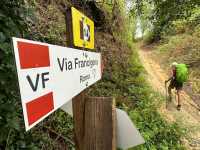
“It is not the mountain we conquer, but ourselves.”
- Sir Edmund Hillary
More than a year has passed since I arrived in Rome on foot.
I can still see it clearly: the long descent through Monte Mario Park, the dome of St Peter’s appearing through the trees for the first time, the strange mixture of elation and disbelief as 2,417 kilometres of walking across England, France, Switzerland and Italy came down to a final stretch of Roman pavement.
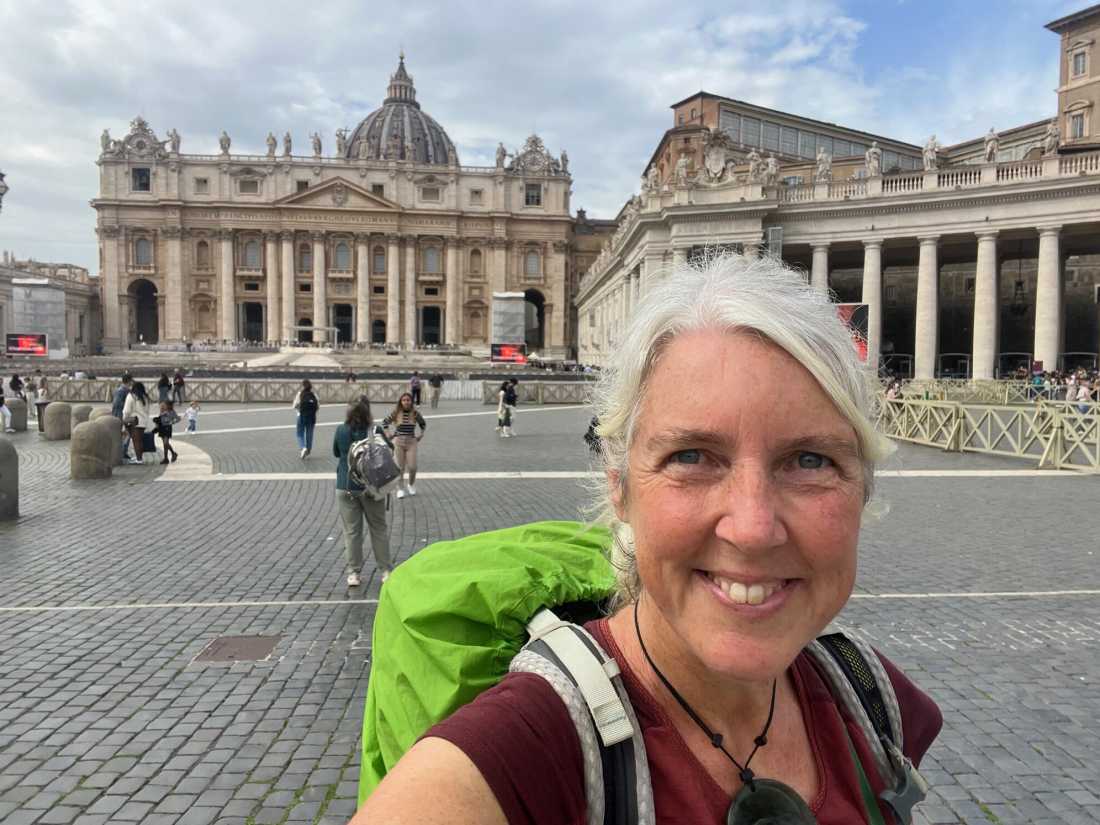
Physically, I’ve recovered. Since then, I’ve walked another thousand kilometres across Spain and spent a week volunteering as a hospitalière in a small French pilgrim hostel. But the Via Francigena has not finished with me. Long after the boots are off, the pilgrimage continues – quietly reshaping perspective, priorities and possibility.
People often ask what I would do differently if I walked it again.
The answer surprises them: very little.
Aside from perhaps avoiding the gîte where wolves howled outside the door – literally and metaphorically – I wouldn’t change much. To do it ‘differently’ would imply control. And one of the greatest gifts of a long pilgrimage is surrendering that illusion. You leave expectations behind and let the Way unfold – the good, the bad and the baffling.
That’s where the magic lives – and that is the Via Francigena.
The Road to Rome
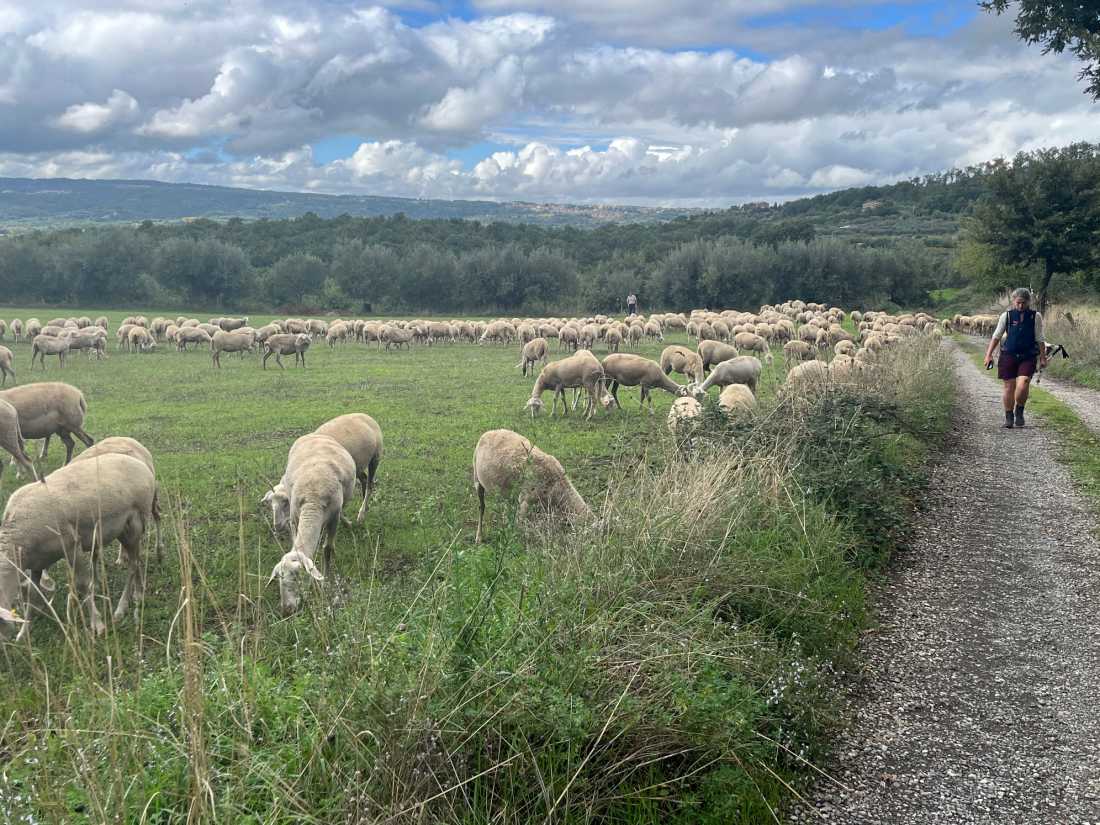
The Via Francigena is an ancient pilgrim route stretching from Canterbury to Rome. Unlike the more commonly walked Camino Francés in Spain, the Francigena still feels raw in places – a patchwork of farm tracks, mountain passes, medieval villages, rice fields, vineyard slopes and occasional roadside verges. It demands adaptability, whether you like it or not.
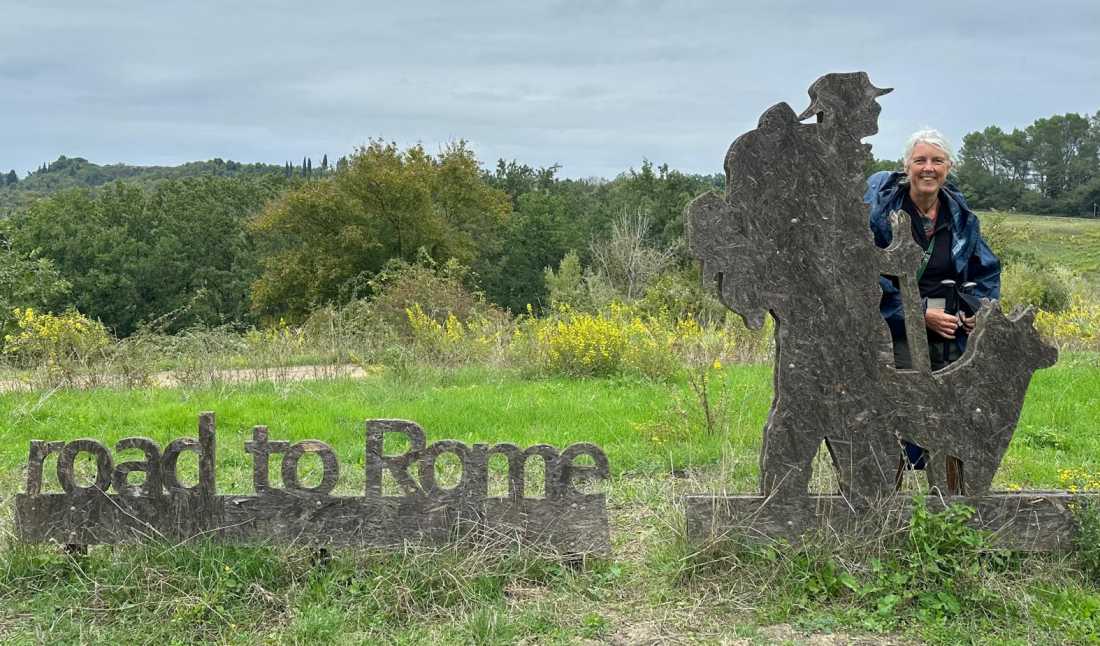
You cross southern England to the white cliffs of Dover, trace rolling French countryside from the fields of Flanders through the vineyards of Champagne to the green mountain slopes and river gorges of the Jura, climb into the Swiss Alps over the Great St Bernard Pass, then descend across northern Italy’s plains and over the Apennines before following the long spine of Tuscany into Lazio and, finally, Rome.
There are days of transcendent beauty: sunrise over frost-tipped vineyards, cowbells echoing across alpine valleys, golden Tuscan light stretching over cypress-lined ridges.
And there are days of rain, mud, blisters, wrong turns and the kind of fatigue that strips away bravado.
Both are essential to the transformational potential of pilgrimage. It is not just a physical challenge, but a mental one – and, after days of walking carrying only what you need to live, a deeply spiritual experience.
When I began the Via Francigena, I was walking not just towards Rome but towards clarity. A few years earlier, I had been told I might have a limited window of able-bodied years ahead of me, and walking seemed like an instinctive response.
Walking had already transformed my relationship with uncertainty on earlier pilgrim paths across France; now it became both ongoing lifeline and laboratory. Could I sustain the healing benefits of pilgrimage longer term by adopting a pilgrim mindset?
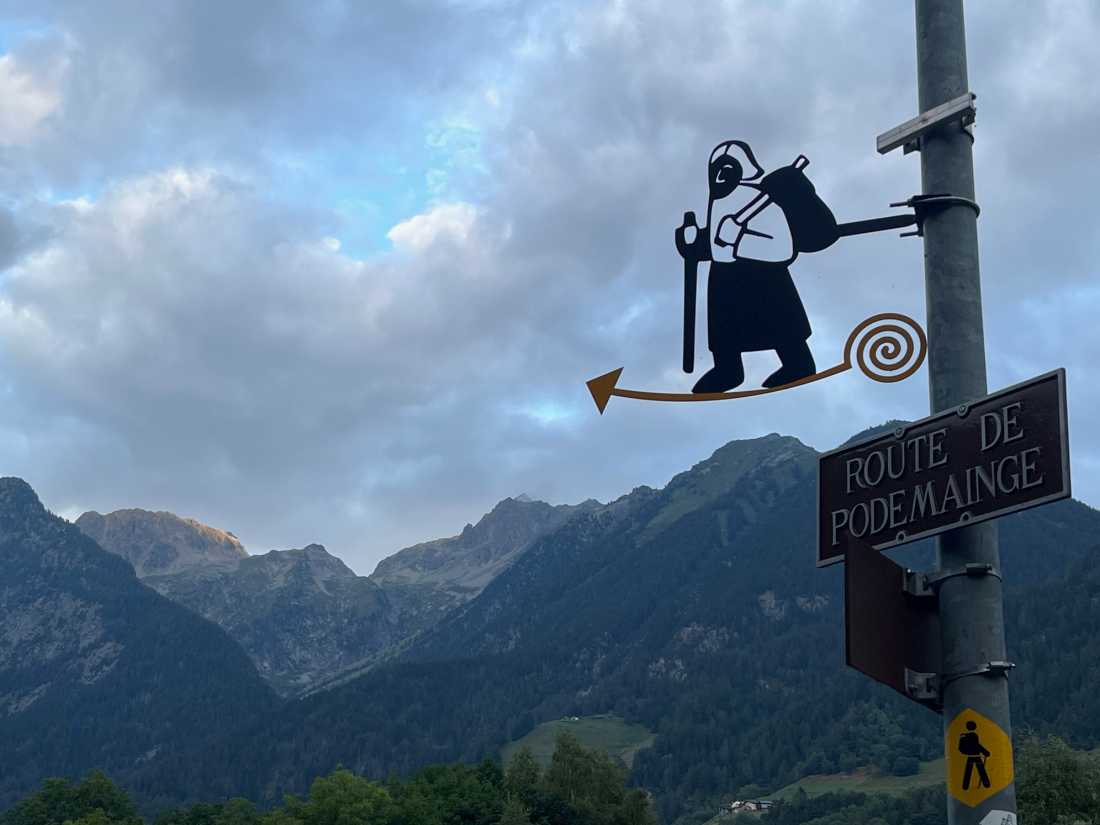
What I discovered along the way is that pilgrimage doesn’t cure Parkinson’s. It changes my relationship with it. And it’s not just the physical act of walking – it’s everything that comes with the long-distance, multi-day hiking experience.
Perversely, the very things that I should find harder due to my brain condition – planning, walking up to 40 kilometres a day, navigating uncertainty and change, decision-making on the fly, engaging socially, operating in three different languages – make it easier for me to live with it.
The Magic of Connection
One of the great joys of long-distance walking is the serendipity of encounters.
The Via Francigena may be an ancient route, but it is very much alive – a network of modern pilgrims, local volunteers, farmers, priests, café owners and fellow adventurers who become part of your story.
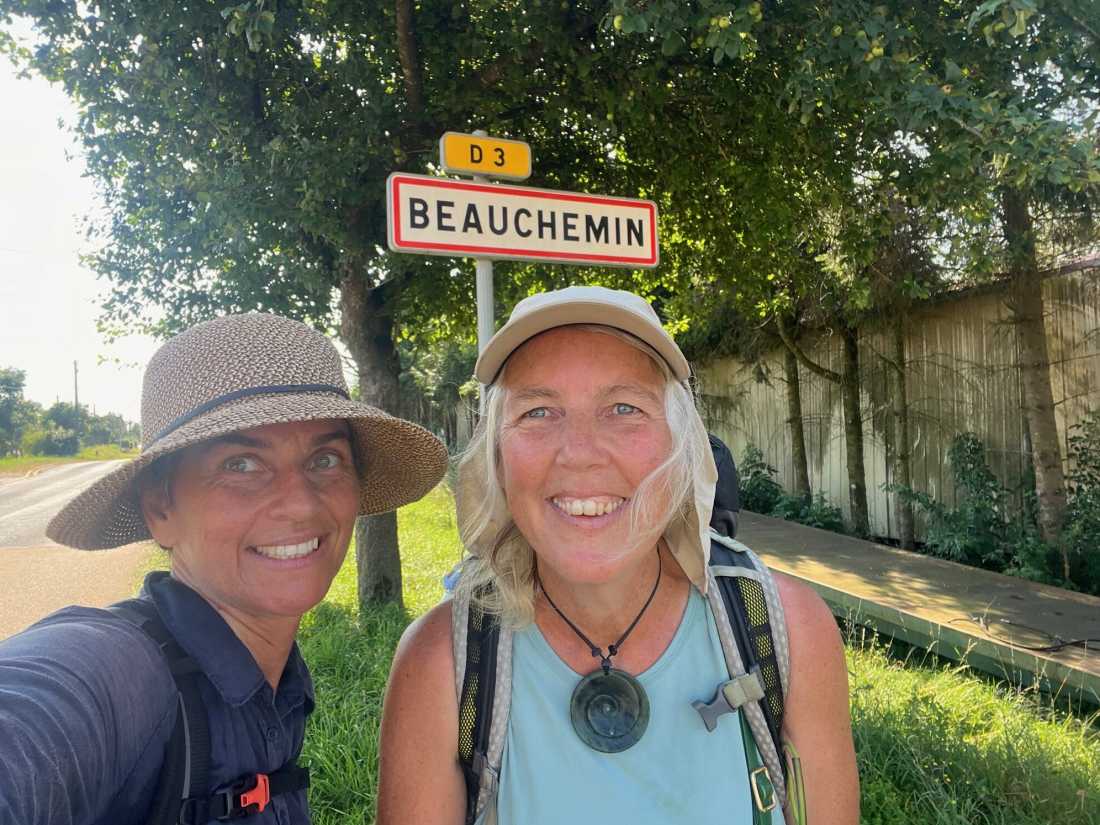
A year after reaching Rome, I was walking across Spain on the Vía de la Plata when a cyclist slowed beside me on Mérida’s ancient Roman bridge.
“I think I’ve met you before,” he said.
We studied each other for a moment before recognition dawned.
“Valpromaro? Domenico?”
He grinned. He had been the hospitalero at one of my favourite pilgrim hostels on the Via Francigena in Italy.
Of all the bridges, in all the towns. In another country entirely. What are the chances?
Every decision in the preceding weeks – stages chosen, rest days taken, even a section skipped – had funnelled us to that bridge at that precise moment.
Coincidence? Perhaps. Perhaps not.
Walking has a way of threading people and places together across time and space. When you move at four or five kilometres an hour, paying attention becomes a discipline. You scan for arrows and scallop shells, but you also learn to watch for metaphorical signs – the familiar faces, the conversations that linger, the repeated place names, the ideas that won’t leave you alone.
On that same Spanish walk, the thought began to form that perhaps, after several pilgrimages, I should give something back. Maybe I should volunteer as a hospitalière.
Within weeks, prompted by that meeting and a series of improbably neat connections, I found myself serving in a small hostel near Roquefort in France – a place that had featured prominently in one of my earlier walks.
The Way, it seemed, was not finished with me.
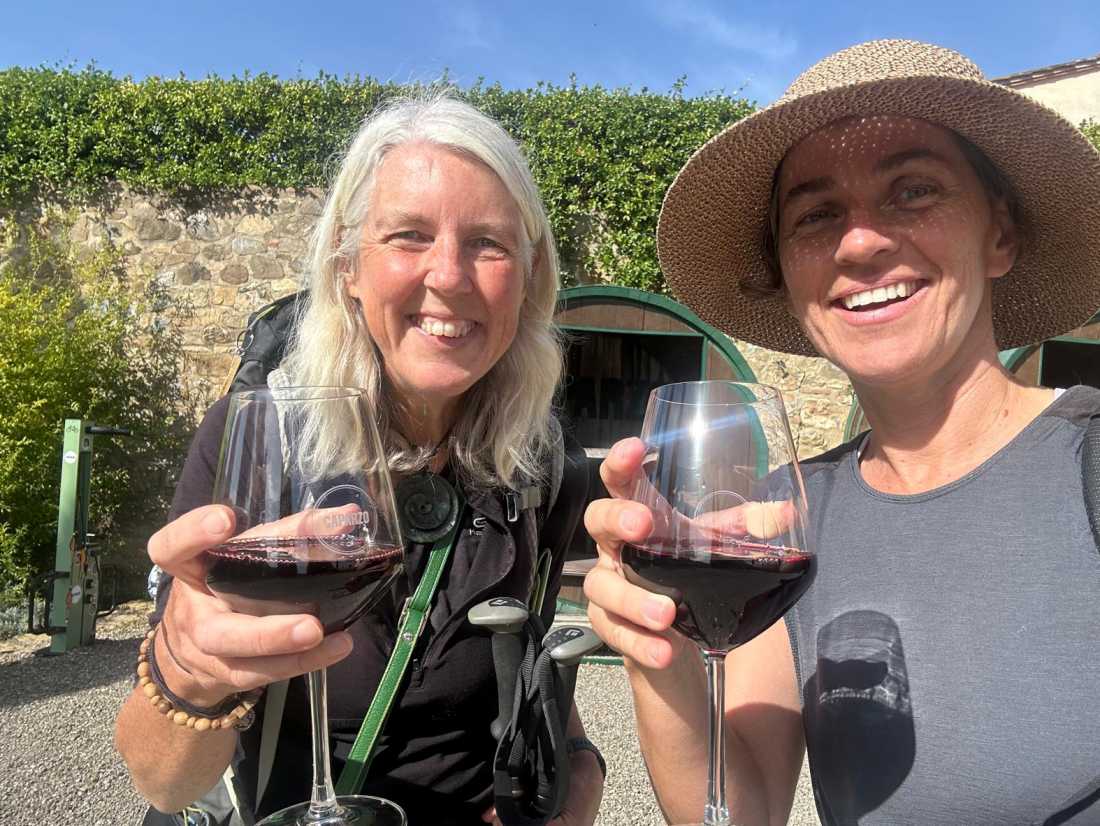
Shedding the protective layers we hide behind
Walking long-distance does something curious.
You begin with a pack full of carefully considered ‘essentials’. Within days, you are posting half of them home.
You shed layers physically – fleece, rain jacket, spare shirt – as the sun climbs or the climb steepens.
And gradually, you shed them metaphorically too.
Titles fall away. Hearts and minds open. The careful armour we construct in daily life becomes unnecessary when your primary concerns are food, water, shelter and the next yellow arrow.
Pilgrimage has a levelling quality. Underneath professional identities and curated personas, we are all flesh and bone, blister and breath, hope and doubt.
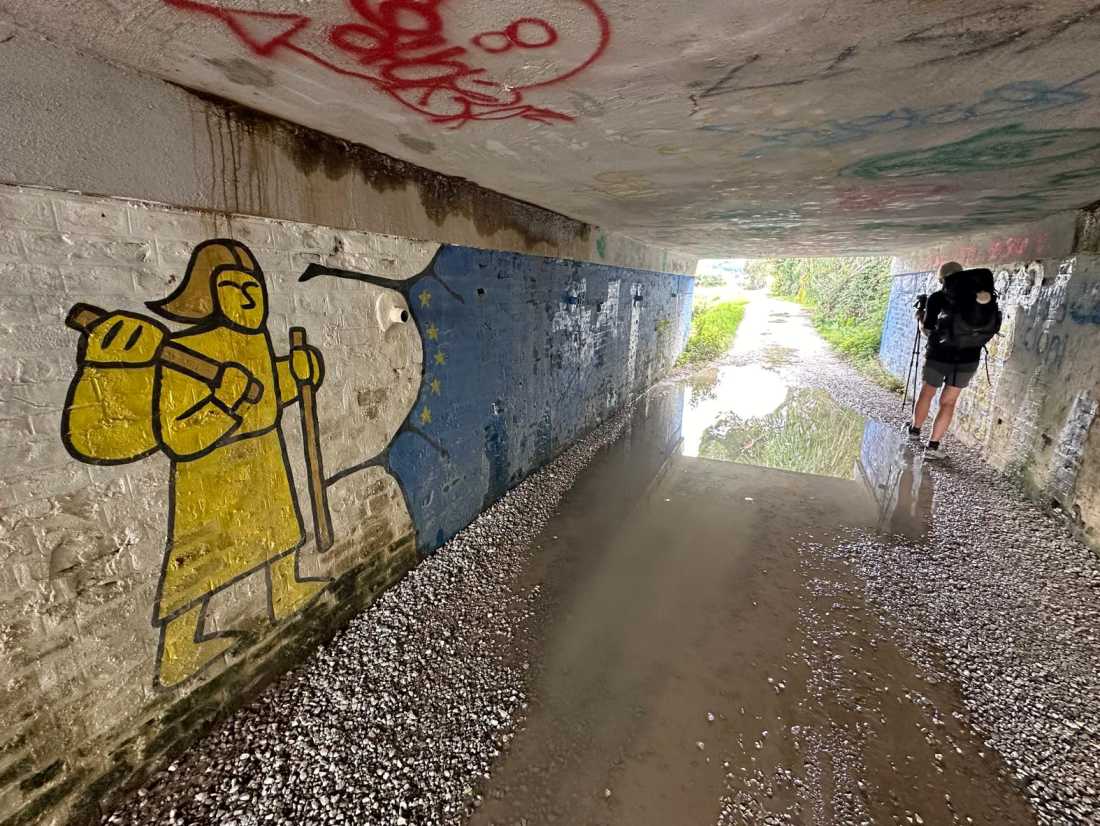
As a hospitalière, I saw this nightly. Pilgrims would arrive exhausted, dusty, sometimes emotional. Around the communal dinner table, stories would surface – grief, diagnosis, divorce, transition, curiosity, faith.
The Via Francigena had given me that same stripping back. Somewhere between the Jura mountains and the rolling hills of Tuscany, I stopped trying to be the ‘strong’ version of myself and began accepting the evolving one.
One evening, a fellow pilgrim who happened to be a photographer asked if he could take my portrait. He asked me to sit quietly, close my eyes and reflect on what the Camino had given me. When I opened them again, tears surprised me.
I realised I had been walking partly to rediscover a previous version of myself – the one before a neurological diagnosis. But pilgrimage was not taking me backwards. It was inviting me forward.
Forward into a new version of myself – not despite challenge, but with it.
And in that moment, something shifted. Not dramatic. Not cinematic. Just a quiet internal recalibration.
Me, with a brain condition. Contented.
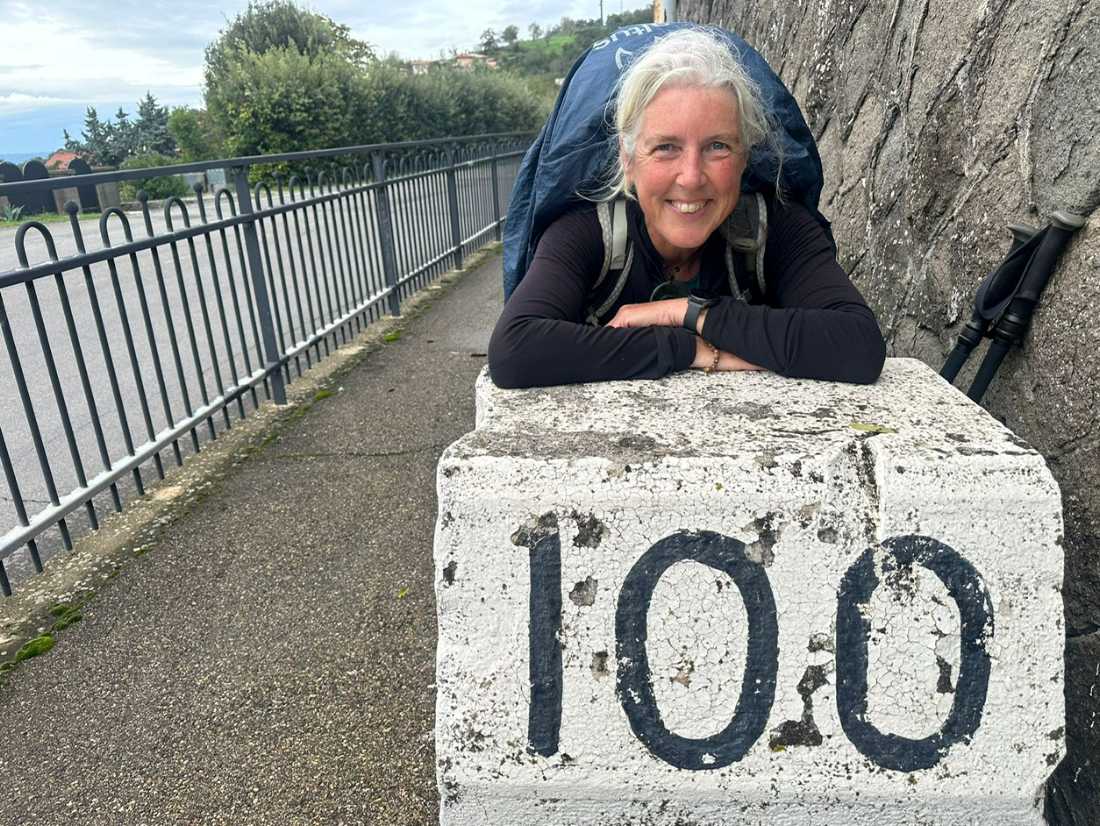
My momentum overcomes all obstacles
Early in my journey, I had been haunted by an image from Rilke’s poem The Panther – a powerful creature pacing behind bars, its will paralysed.
The panther motif kept appearing along the way. At times, it felt like a metaphor for fear.
But somewhere on the road to Rome, the imagery changed.
Instead of a caged animal, I began to imagine a black panther walking beside me – fluid, alert, instinctive. A symbol of transformation through shadow. Night vision refined by darkness.
The Via Francigena is not an easy route. There are long, exposed stretches. There are moments of doubt. But if you keep placing one foot in front of the other, something remarkable happens.
Momentum builds – in the body, in the mind, in the spirit.
And momentum, I have learned, is stronger than fear.
By the time I reached Rome, the panther no longer symbolised threat. It symbolised strength. Not aggression – grace in motion.
After arriving, I had a small tattoo inked on my ankle: a panther poised to move forward. A reminder that paralysis – literal or metaphorical – is countered not by resistance, but by movement.
My momentum overcomes all obstacles.
The Only Way Is Up
When I finally stood barefoot on the warm cobbles of St Peter’s Square, 99 days after leaving Canterbury, I felt many things: relief, pride, gratitude, disbelief.
But more than anything, I felt light. Grounded, but released.
Not just because my pack was off my shoulders, but because something internal had shifted.
The Via Francigena had strengthened my body. It had steadied my mind. And it had restored something deeper – clarity, trust and hope.
Pilgrimage is transformation – not only of the body, but of perspective.
It does not remove challenge. It reframes it.
Six years ago, I was told I might have five able-bodied years left. A year ago, I walked into Rome stronger than when I began. Fit. Healthy. Blister-free. Steady in body and mind.
I have now walked more than 5,000 kilometres across five countries and four major routes.
And I am still walking.
The Via Francigena continues to ripple outward – in conversations, in choices, in the quiet confidence that comes from knowing that when things feel uncertain, I can move.
Step by step.
If you are considering a long-distance walk – whether along the Via Francigena or another historic trail – know this: it is not about conquering mountains. It is about discovering what rises within you when you choose to keep going.
‘Ultreia e suseia,’ pilgrims say on the road. Ever onward. Ever upward.
Playlist: ‘The only way is up’ by Yazz.
Read more about Jennifer’s experiences walking the Via Francigena from Canterbury to Rome in her latest book, The Only Way is Up: On Foot to Rome, available in all good bookstores, at your local library, from https://myparallellives.com or on Amazon Kindle and print.
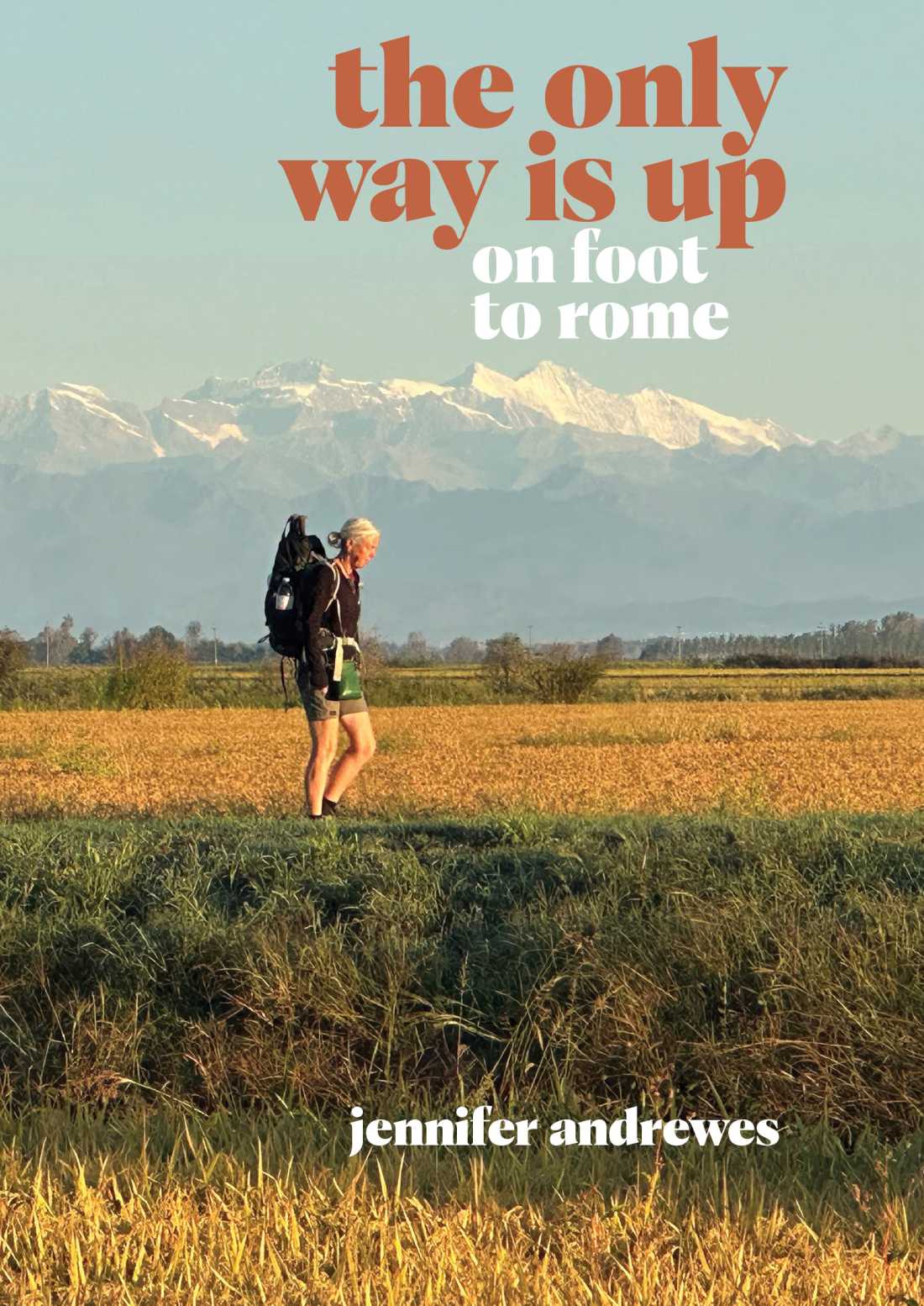
The Only Way is Up: On Foot to Rome
The Only Way is Up: On Foot to Rome is a memoir of long-distance walking, but it is also a meditation on how we move forward when life asks us to begin again.
Setting out from Canterbury and walking some 2400 km to Rome along the Via Francigena, Jennifer Andrewes undertakes a modern pilgrimage across England, France, Switzerland and Italy. What begins as a physical journey soon becomes something deeper: an exploration of momentum, mindset, and the quiet power of putting one foot in front of the other when the way ahead is uncertain.
Structured as a series of daily stages, the book follows the rhythms of pilgrimage life – early starts, long days on the road, chance encounters, moments of solitude, and the simple rituals that sustain a walker: coffee stops, conversations, rest, reflection.
Along the way, Jennifer meets fellow pilgrims from around the world, navigates doubt and discomfort, and learns to trust the unfolding path rather than trying to control the outcome.
While written through the lens of walking to Rome, The Only Way is Up speaks to anyone standing at a crossroads. It offers pilgrimage not as an escape from real life, but as a practical framework for living well: shedding excess weight – physical and metaphorical – building resilience, cultivating presence, and finding meaning through steady forward movement. The journey reveals how momentum can transform thinking, restore confidence, and open new possibilities.
The author’s experience living with Parkinson’s is part of the landscape, but it does not dominate the narrative. Instead, it quietly sharpens the book’s central insight: that while we cannot always change our circumstances, we can change how we meet them. Pilgrimage becomes a way of training response – choosing movement over stagnation, curiosity over fear.
For readers considering a camino or long walk, the book offers an honest, grounded portrait of life on the trail. For others, it provides something broader: reassurance that clarity often comes through motion, that the path reveals itself step by step, and that sometimes the only way forward – in walking and in life – is onwards and upwards.
The Author
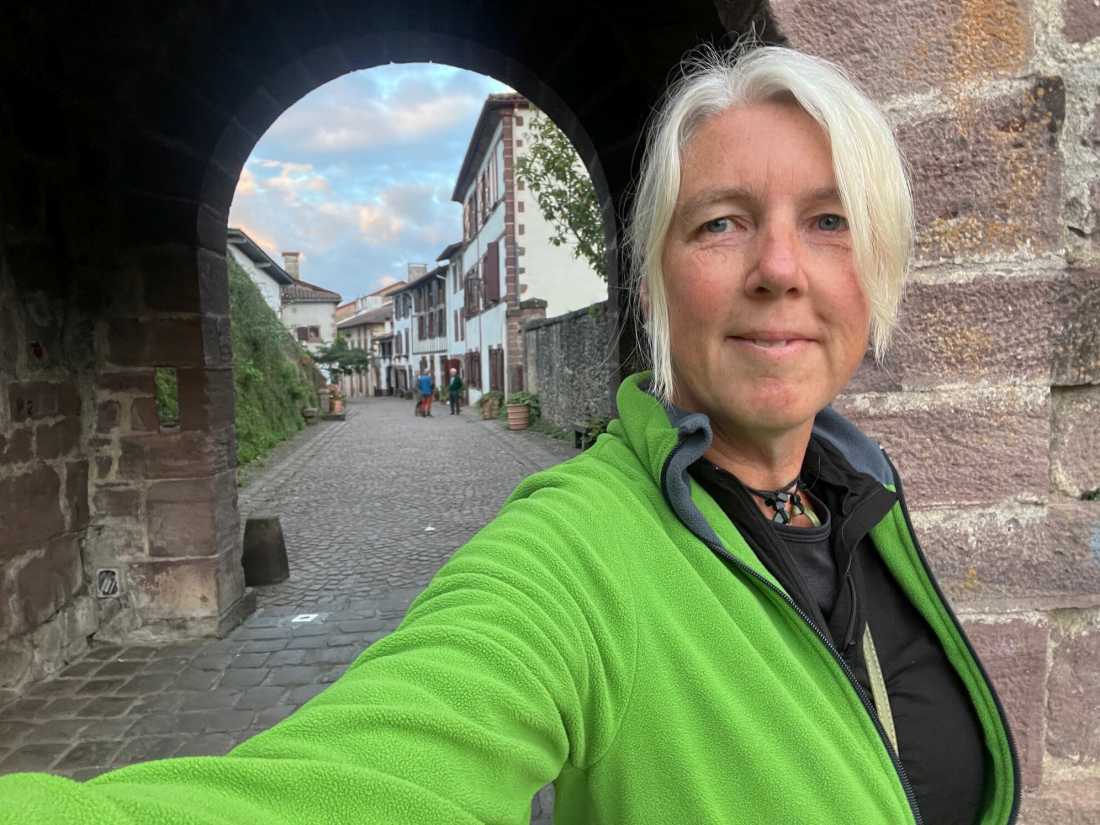
Jennifer Andrewes is a New Zealand-based writer whose life journey is a testament to resilience, transformation, and an unstoppable spirit.
As a child, Dunedin-born Jennifer Andrewes spent time living in France kicking off a life-long love affair with the country. An avid walker, Jennifer first joined a local walking group to meet people and explore the local countryside, while working as a language teaching assistant in Dunkerque. Thirty years later, she’s hooked!
A communications professional, she has worked in tourism and government roles both here and in the UK, as well as undergoing stints as a freelance travel writer.
Her blog on the family’s French adventure www.myparallellives.com was widely enjoyed and it was prompting from readers that led Jennifer to write a book about the family’s experience: Parallel Lives: Four Seasons in the French Pyrenees.
Diagnosed with early-onset Parkinson’s in 2019, Jennifer took up long-distance walking, which she uses not only to maintain her physical health but as a profound metaphor for overcoming life’s challenges.
Her pilgrimages include the Voie du Puy (2022), the Voie de Vézelay (2023), the 2400 km Via Francigena from Canterbury to Rome (2024) and the Via de la Plata (2025). In 2026 she will walk the 1500 km Chemin d’Assise from Vézelay to Assisi and has plans to walk Rome to Santiago in 2027.
Her blog posts about her pilgrimage adventures are widely read and it was encouragement from followers that led Jennifer to write about her Camino experiences, in A Will and a Way: On Foot Across France and The Only Way is Up: On Foot to Rome.
Explore the Via Francigena
> View all Via Francigena itineraries
Have you been inspired to walk the Via Francigena? Let us know in the comment section below.